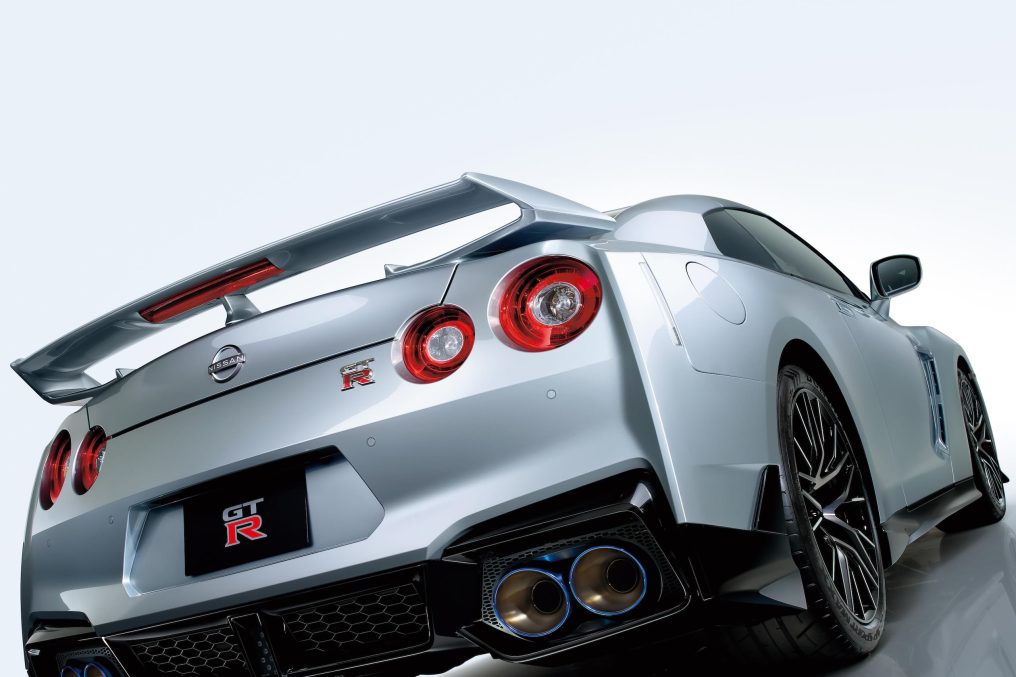

The R35 GT-R ran for 18 years. It lapped the Nürburgring at times that made European supercar manufacturers uncomfortable. It became a benchmark, a cultural artifact, and for a certain kind of enthusiast, something close to a religion. When production ended, the question of what comes next sat over Nissan like unfinished business. At the 2026 New York Auto Show, the company finally started answering it.
Ponz Pandikuthira, Nissan North America’s Senior Vice President and Chief Planning Officer, confirmed to The Drive that the R36 GT-R is actively in development and will arrive before the end of the decade. The news puts to rest months of speculation about the direction the car would take, and more importantly, it addresses the fear that ran through the enthusiast community when the R35 wound down: that Nissan might abandon the combustion engine entirely in the name of electrification.
The 2025 Ford Mustang GTD Is a Race Car That Happens to Be Street Legal
That is not what is happening. The R36 will be built around a hybrid powertrain that retains the foundational block of the VR38 twin-turbo V6 that powered the R35, a piece of hardware the tuning community has spent nearly two decades celebrating for its durability and near-limitless power potential. Pandikuthira was direct about the logic. The block of that engine is, in his words, so great that discarding it would make no sense. What will change significantly are the elements surrounding it: cylinder heads, pistons, and combustion methods are all expected to see ground-up overhauls. The car itself will sit on a completely new chassis, and Pandikuthira described it plainly as an all-new car with a powertrain that is mostly new.
The hybrid component is not purely a performance decision. It is a survival one. Strict global emissions standards, including the incoming Euro 7 regulations, make some level of electrification a requirement for any car that wants to exist as a true global product. Nissan is threading that needle carefully, building a car that can pass those standards without abandoning the identity that made the GT-R worth preserving in the first place. A full EV successor, Pandikuthira confirmed, is not the answer being pursued here.

What anchors all of it is the mention of the Nürburgring. Pandikuthira invoked the circuit deliberately during the interview, and that choice carries weight. The R35 was defined by its lap times on that track. The R36 being developed with the same reference point signals that the uncompromising, track-focused DNA of the GT-R lineage is not being softened for a new era. It is being carried forward. Concrete announcements are expected by 2028, with the R36 GT-R set to reach the street before 2030.