
Before Samurai Champloo existed, the connection between hip-hop and samurai culture was already being drawn by people who understood that both traditions are, at their core, about mastery, motion, and the discipline required to make something difficult look effortless. In the 1990s, the Wu-Tang Clan built an entire aesthetic around that overlap, weaving martial arts imagery and samurai philosophy into the fabric of New York street rap. By 1999, Jim Jarmusch’s Ghost Dog: The Way of the Samurai was doing something similar on film, with RZA scoring a hitman’s quiet, methodical existence with beats that moved like kata. The philosophical bridge had been built. Shinichirō Watanabe walked across it and built something permanent on the other side.
The Animator Who Thinks With His Hands
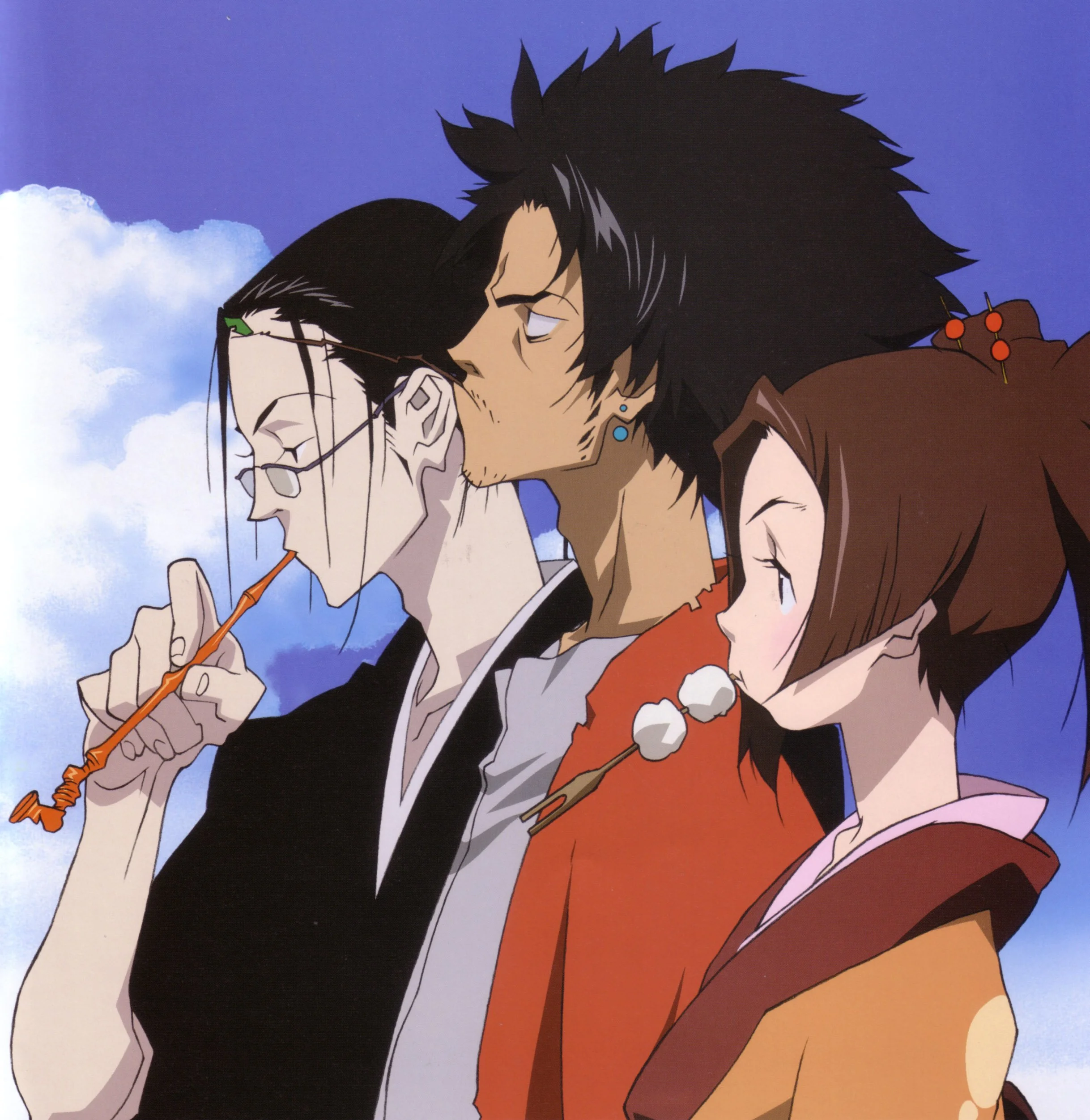
Samurai Champloo ran for a single season between 2004 and 2005, written by Dai Satō and directed by Watanabe, the same filmmaker who had already rewritten the rules of anime music with Cowboy Bebop. Where Bebop pulled from jazz, blues, and rock, Champloo placed hip-hop directly into Edo-period Japan and refused to treat the anachronism as a contradiction. The show’s central character Mugen fights with a style that blends breakdancing with swordplay, giving every action sequence a kinetic, improvisational quality that no conventional period drama could have produced. Graffiti appears on Edo walls. Freestyle energy runs through the dialogue. The series understood that hip-hop was never just music. It was a way of moving through the world.
An Everlasting Vibe: The Timeless, Soulful Universe of Nujabes
The soundtrack is where that understanding becomes undeniable. Nujabes, Fat Jon, Tsutchie, and FORCE OF NATURE produced and curated the music across the series, each bringing a distinct sensibility that served the show’s dual identity. Nujabes brought a reflective, soulful quality built from mellow beats and layered samples, a sound that carried the elegance of Edo Japan without losing its contemporary feel. Fat Jon, rooted in American underground hip-hop, contributed tracks with more dynamic force, amplifying intensity during the sequences that demanded it. Together they didn’t simply score the visuals. They propelled them, shaping tone and pacing and atmosphere in ways that made the music inseparable from the experience of watching. The opening track Battlecry all but defines what the series is before a single frame of story has been told.
The episode Gamblers and Gallows demonstrates what that approach produces at its best. Jin, the stoic ronin trained in traditional swordsmanship, enters a high-stakes duel in a crowded marketplace. The percussion-driven score underscores every movement, and crucially, every pause. The silence between attacks carries as much tension as the strikes themselves, echoing the syncopation that gives hip-hop its rhythmic intelligence. What could have been a conventional action sequence becomes something closer to choreography, where timing and flow and improvisation matter as much as technique. The soundtrack isn’t illustrating the scene. It is the scene.
I wanted the music to feel like it was happening at the same time as the action, not underneath it. – Shinichirō Watanabe

The series’ influence has moved outward steadily ever since. Afro Samurai followed its martial-musical blueprint. The Boondocks tapped into the same frequency, using hip-hop as both soundtrack and social lens. Flying Lotus scoring Netflix’s Yasuke anime feels like a direct continuation of what Champloo started, a modern echo of the same cross-cultural rhythmic energy. And the lo-fi hip-hop genre, those chilled, sample-based beats that now soundtrack late nights and long study sessions across the internet, owes a significant portion of its cultural identity to what Nujabes and his collaborators built for this show.
That legacy has recently found a new expression in gaming. Ghost of Yōtei, this year’s follow-up to Ghost of Tsushima, introduces a Watanabe Mode alongside its existing Kurosawa Mode, a tribute that swaps grayscale solemnity for rhythm and musical timing. Every katana strike lands like a drum hit. The silence between moves hums with tempo. It is a gesture that confirms what Samurai Champloo has always represented: not a nostalgic curiosity, but a living creative frequency. One that has never really stopped pulsing.