For most of my childhood, my weeks were defined by a rigid structure of faith. There were the memorized Bible verses at my Christian school and the Saturday morning programs at my Seventh Day Adventist church, known as Sabbath School. As a child, I never truly understood the depth of these practices; they were simply activities, rituals performed by people who truly believed. But the Sabbath, the period from Friday sunset to Saturday sunset, also had its own special traditions. During this time, we could only watch faith based films, and on those Saturday afternoons, my family had a ritual. We would gather to watch DreamWorks’ 1998 animated epic, The Prince of Egypt. I watched it so many times that its DNA became part of my own; I knew every line, every lyric, every subtle sound effect. Looking back now as a 27-year-old who is no longer very religious, I realize that this film was its own form of spiritual education, and its lessons have proven to be the most enduring of all.
An Epic Told in Harmony
The genius of The Prince of Egypt lies in its music. The legendary soundtrack, crafted by Hans Zimmer and Stephen Schwartz, is not a collection of songs but the film’s primary narrative engine, a breathtaking opera that tells a timeless story with a modern, emotional soul. The opening number, “Deliver Us,” is an operatic cry for freedom, introducing us to the brutal world of ancient Egypt through the eyes of Yocheved, a Hebrew mother desperately trying to save her son. When the adult Moses discovers his true heritage, his identity crisis is not explained through dialogue but felt through the shattering internal monologue of “All I Ever Wanted,” a song of desperate denial. His journey of self-forgiveness and the discovery of a new, more fulfilling life among the desert nomads is captured in the joyful, uplifting anthem, “Through Heaven’s Eyes.”

But the film does not shy away from the story’s terrifying darkness. The confrontation between Moses and Rameses is not just a debate; it is a battle of gods, perfectly encapsulated in the sinister and spectacular “Playing With the Big Boys.” And the horrifying consequences of that confrontation are unleashed in “The Plagues,” an apocalyptic duet that portrays the wrath of God with a dramatic and genuinely terrifying weight. The musical journey culminates in the cathartic and visually stunning finale of “When You Believe,” where Moses finally leads his people to salvation in one of the most satisfying endings in animation history.
The Tragedy of Two Brothers
While the music tells the story, the film’s heart is the deeply nuanced and ultimately tragic relationship between Moses and Rameses. This is the film’s greatest triumph: its refusal to create a simple hero and villain. Rameses is not a one-dimensional tyrant. He is a man who loves his brother deeply, who saw Moses not just as a sibling but as his best friend and confidante. When Moses returns to Egypt after years in exile, Rameses’ first instinct is one of joy, an attempt to pick up right where they left off. His subsequent opposition to Moses is born not of pure hatred, but of a frustrated inability to understand. He doesn’t recognize this new, invisible God, and he cannot comprehend why the brother he loves has become its messenger.

Moses is trapped in a similar predicament. He is a reluctant prophet, a man wrestling with his own doubts about a God he doesn’t fully understand. All he knows is that his people are suffering and that he has been chosen to stop it. The pain on his face as he is forced to bring God’s wrath down upon Rameses—upon the man, the brother, he still loves—is heartbreaking. He knows it must be done, but the personal cost is immeasurable. It is not a story of good versus evil; it is a Shakespearean tragedy of two men bound by love but torn apart by faith and destiny.

A Faith That Feels Human
Looking back, I realize now why the film resonated so deeply then and continues to do so today. Unlike many preachy retellings, it never feels preachy. It succeeds because it is relentlessly focused on the profoundly human experience of its characters. Their faith is not a simple, unwavering conviction; it is a journey filled with doubt, fear, and the immense burden of purpose. The film is a perfect illustration of the hardships we all experience when trying to find fulfillment and live a life of meaning.
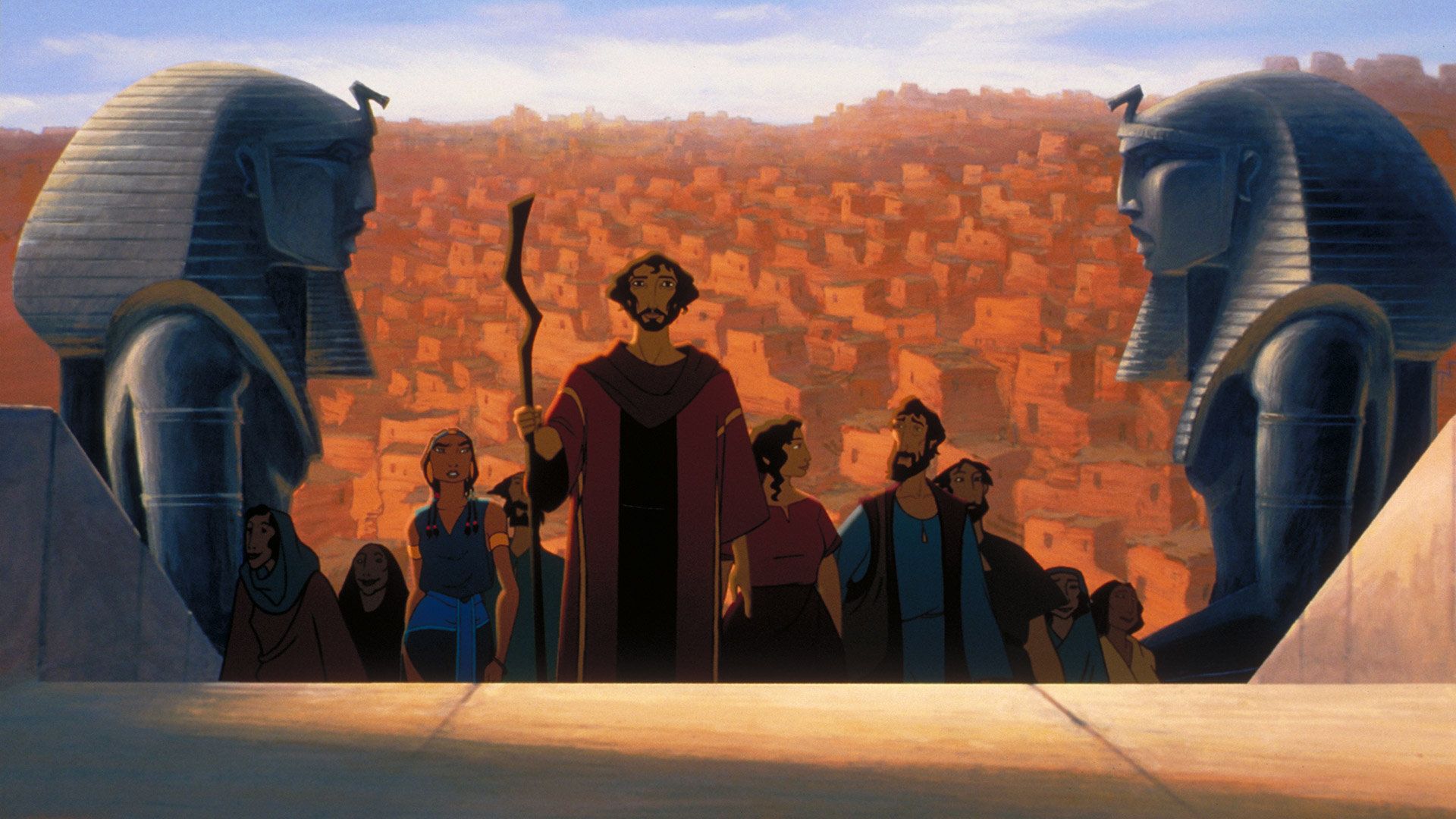
Today, I find myself increasingly intrigued by how these ancient stories continue to shape our modern world. And for me, The Prince of Egypt remains the most powerful example. I may have grown out of the structured Sabbath School lessons of my youth, but the lessons of this film have stayed with me. It is a timeless story about brotherhood, sacrifice, and the courage to believe in something greater than oneself, told with a level of artistic mastery that is simply breathtaking. It is more than one of the greatest animated films ever made; it is a perfect, enduring, and deeply moving masterpiece.