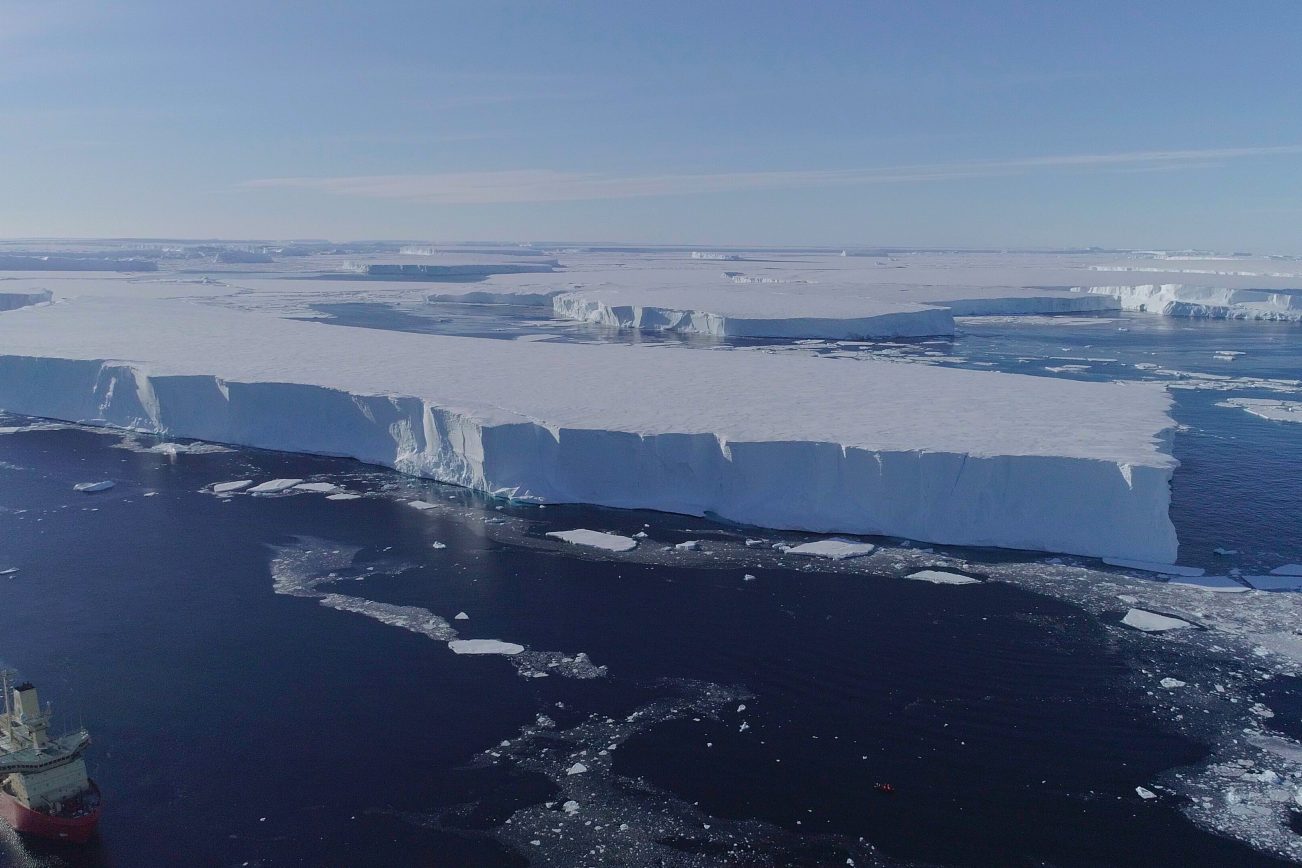

A new study published in Nature Geoscience found that the Thwaites Glacier in Antarctica is disintegrating faster than previously believed due to climate change. Nicknamed Antarctica’s “Doomsday Glacier” for its massive size, the Thwaites Glacier is now “hanging on by its fingernails.”
New Event Horizon Telescope Images Show Massive Black Hole Shooting Powerful Cosmic Jets
Though it wouldn’t actually be the end of the world if the Thwaites Glacier breaks off into the ocean, such an event will start a chain reaction. Researchers warn if the ice shelf becomes unmoored from the sea floor, it could lead to ice cliff collapse. This process would then trigger even more melting. The surrounding area in the West Antarctic holds enough ice to force sea levels to rise by 15 feet. As a result, this event will cause irreparable damage to coastlines around the world. Put frankly by Alastair Graham, a co-author of the study, “You can’t take away Thwaites and leave the rest of Antarctica intact.”
Scientists have been monitoring the Thwaites Glacier since 1973. Rather than being fixed to land, scientists discovered in the ’80s that Thwaites is grounded in the ocean floor. This fixation allows warming currents to melt the glacier from the bottom. Its grounding line was receding by about 0.6 miles per year, until recently as that figure has now doubled. Up to 100 billion tons of ice melt away from the Thwaites Glacier per year – a rate twice as fast as 30 years ago. 2021 estimates predicted the ice shelf had five years until collapse, though new findings suggest it could be much sooner.

Lastly, in case you missed it, Earth Records its Shortest Day as the Planet Spins Faster Than Ever.