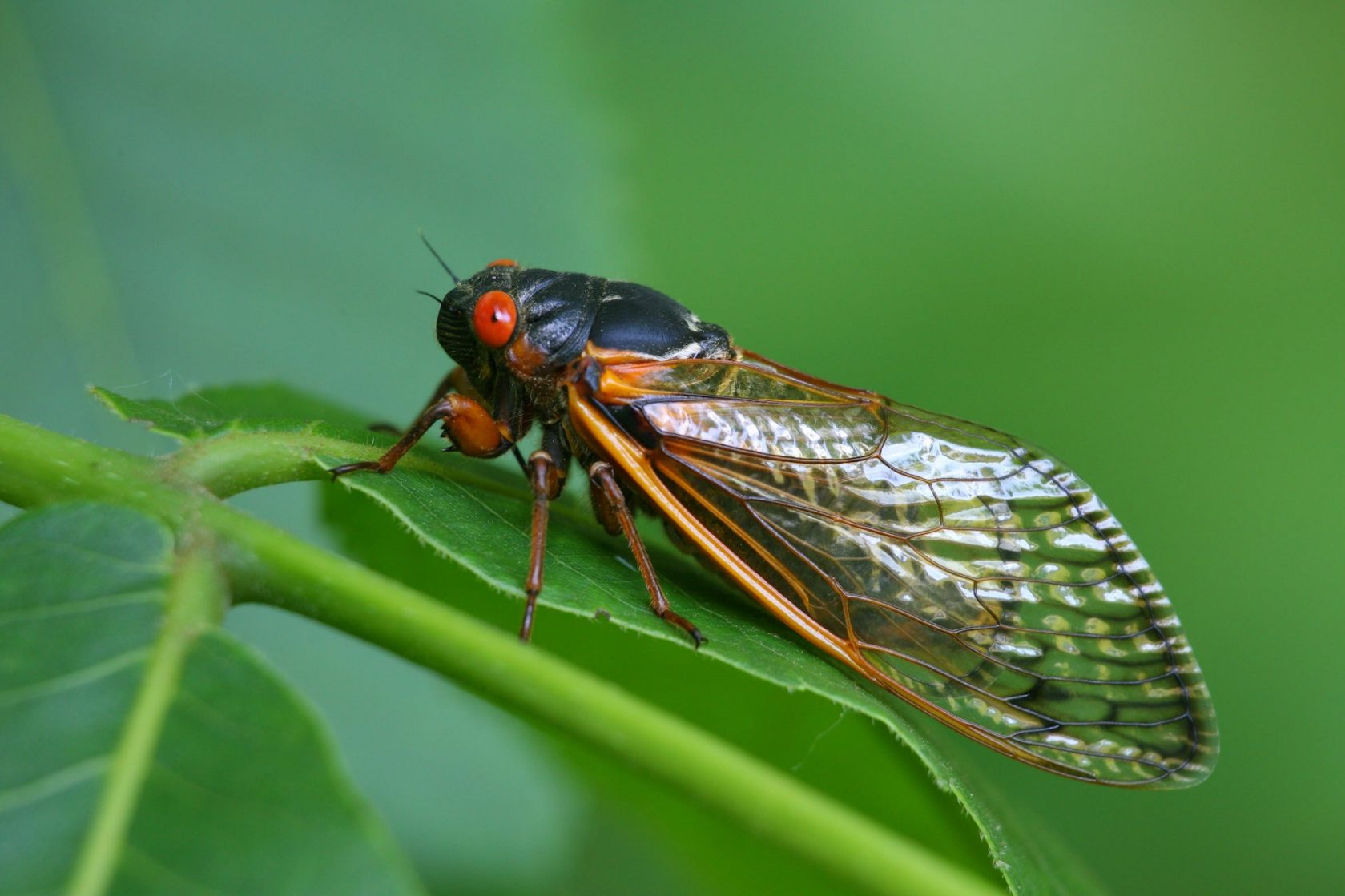
While many humans scramble to get their vaccine before summer, another species is also gearing up to spend time outside after their own lockdown of sorts. And no, we’re not talking about 2020’s murder hornet scare. Rather, it’s a massive swarm of cicadas that are expected to take over the Eastern U.S. this summer. If you heard about this impending invasion and don’t know what it’s all about, you’re in the right place. We’ll attempt to extinguish all your confusion by telling you everything you need to know about the 17-year cicada invasion.
What the f*ck are cicadas?
Often mistaken for locusts, cicadas are annoying little insects known for their obnoxiously loud “singing”. Worldwide, there are over 3000 species, though there’s only a mere 190 species in North America. Cicadas can follow one of three life cycles: annual, periodical, or protoperiodical. Annuals emerge every year, while periodicals emerge after longer periods of time. Protoperiodicals are a sort-of hybrid, their schedule falling somewhere in the middle. The massive swarm coming this summer follows periodical life cycles. Periodical cicadas are known for their black bodies and bold red eyes as opposed to the greenish color of annual cicadas.
This particular bunch of periodicals has been dubbed Brood X, or the Great Eastern Brood. This brood covers the most area and flaunts the greatest depth in population compared to any of the other broods. That’s all a fancy way of saying there’s going to be a shitload of cicadas.
Where are the cicadas coming from?
This bunch of periodical cicadas spend 17 years underground before emerging from the soil like a swarm of larvae zombies. During that time, they feed on sap from tree roots and gauge the soil temperature as they wait to reemerge. Once the soil reaches 64 degrees Fahrenheit, it’s showtime. They march towards the nearest tree and climb to the top before shedding their external skeleton for their adult winged form.
This scientific phenomenon is nothing new. The life cycle in periodical cicadas was first observed in scientific journals in the early 1700s. They’ve kept a pretty consistent 13 or 17-year schedule since. Historically, cicadas have been mentioned in literature since Homer’s Iliad.
Brood X is expected to arrive in mid-May, populating the eastern U.S. from Georgia through Illinois. Washington D.C. is expected to be a major hot spot for cicadas this summer.
How long are they gonna be here?
Cicadas serve a distinct purpose above ground. Of the billions that will emerge, many will get eaten by birds, squirrels, raccoons, and other creatures. Their population is so dense that the critters will be fully bloated before even making a dent. This allows the survivors to mate and lay eggs without such a prominent predatory threat.
The males chirp and buzz in hopes of attracting a mate. Their species-specific “song” is produced using membranes in the abdomen called tymbals. The females respond to the mating songs with timed wing-flicks. The loudest cicadas in North America can reach levels upwards of 100db, roughly equivalent to a motorcycle or garbage truck. But next time you’re annoyed by the loud buzzing of cicadas, understand they’re just tryna stay boo’d up like the rest of us.
After mating, females cut slits into twigs and lay about 20 eggs each. Once the eggs hatch, the nymphs (cicada babies) drop to the ground, burrow into the soil, and start the process over. This process altogether takes a couple of months, with most of the adults dying by mid-June.

Will cicadas attack me?
Thankfully, the answer is no. Cicadas don’t have any sort of teeth or stinger that can harm us. The worst that can happen is they mistake you for a tree and try to pierce your skin for nutrients. The joke’s on them though because consuming human blood would more than likely kill them.
So how do I deal with them?
Well, since they won’t blatantly attack humans, you just gotta let them do their thing. Cicadas are most noisy during the warmest parts of the day, so they shouldn’t disrupt your sleep schedule. However, if you’ve got any trees in your yard, it’s likely they’ll be filled with mating cicadas. Their eggs often damage the more fragile trees, but your flowers should be relatively untouched. The carcasses of dead cicadas are what create most of the mess. In the most populous areas, the concentration of carcasses is extremely dense and will need to be shoveled.
Some people take this opportunity to educate themselves and their children on cicadas with apps like Cicada Safari. Snapping pictures helps scientists collect data on the population density of cicadas in different areas. All in all, summer will be a great time to observe this natural scientific phenomenon. But expect the majority of people to freak out and try to swat the little fellas. Just be patient, let the cicadas vibe out for a minute, and they’ll be out of your hair before you know it.
Let us know your thoughts on this wild cicadas invasion in the comments below! Lastly, for more WAVYPACK news, check out the mysterious Oumuamua space object that could be a piece of a distant planet.